Homework Assignments
Homework #1: Estimating a Random Constant
The goal of this task is to estimate a scalar random constant, which may be a voltage level. Let's assume that we have the ability to take measurements of the constant, but that the measurements are corrupted by 0.1 Volt RMS white measurement noise (e.g. our analog to digital converter is not very accurate). In this example, the process is governed by the linear difference equation:
The goal of this task is to estimate a scalar random constant, which may be a voltage level. Let's assume that we have the ability to take measurements of the constant, but that the measurements are corrupted by 0.1 Volt RMS white measurement noise (e.g. our analog to digital converter is not very accurate). In this example, the process is governed by the linear difference equation:
with a measurement z that is:


The state does not change from step to step, this is why A=1. There is no control input, therefore B =0,u=0. Our noisy measurement, directly measures the state - therefore H=1. Notice that the subscript k was dropped in several places because the respective parameters remain constant in our simple model.
Programming Language: preferably one Python, MATLAB, C++, or JAVA
Form of the Report: 1. Brief report with the code and the relevant plots indicating the correct estimate of the constant, 2. Comments on what you understood about the filter operation.
Deadline: March 11, 2016
Form of Report: Please send your code and an example of its execution in a pdf or other format.
Submit your Report: Please send an e-mail to [email protected] and give it the following title "[IAR A1] NAME SURNAME"
Help with the assignment: Please read the document "An Introduction to Kalman Flter" by Greg Welch and Gary Bishop. The assignment is the problem in Section 3 of this document.
Programming Language: preferably one Python, MATLAB, C++, or JAVA
Form of the Report: 1. Brief report with the code and the relevant plots indicating the correct estimate of the constant, 2. Comments on what you understood about the filter operation.
Deadline: March 11, 2016
Form of Report: Please send your code and an example of its execution in a pdf or other format.
Submit your Report: Please send an e-mail to [email protected] and give it the following title "[IAR A1] NAME SURNAME"
Help with the assignment: Please read the document "An Introduction to Kalman Flter" by Greg Welch and Gary Bishop. The assignment is the problem in Section 3 of this document.
Homework #1 - Bonus: Develop an EKF to estimate the attitude of the UAV based on its IMU data
|
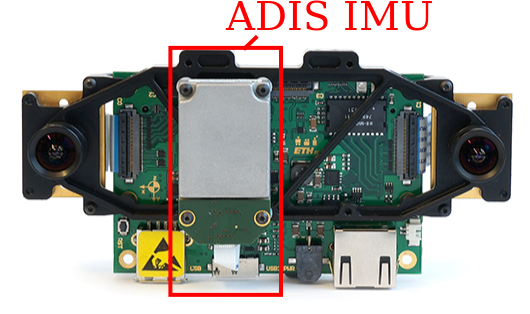
Use the IMU data that you can download following this URL, and develop an Extended Kalman Filter solution to estimate the attitude of the aerial robot. For your development you can use any of the following languages: C++, Python, MATLAB Note that the data are available in the form of a ROS bag. The IMU data are collected using the VI-Sensor on-board the Firefly MAV. ROSBAG with IMU Data: Download Programming Language: C++, Python, MATLAB Deadline: March 18, 2016 Form of Report: Please send your code and a ROS bag with the new topics available. Alternatively, send your code and a *.csv or relevant file with the estimates. Submit your Report: Please send an e-mail to [email protected] and give it the following title "[IAR BONUS1] NAME SURNAME" |
|
Homework #2: Studying a Research Paper
Study the following paper:
R. Mahony, V. Kumar, and P. Corke, "Multirotor Aerial Vehicles", IEEE Robotics & Automation Magazine, September, 2012
And select one of the Modeling, Estimation and Control sections to present in a 5-slides presentation. More specifically:
Deadline: May 1, 2016
Form of Report: Please prepare a presentation and extended notes (graduates). You will present during the weekly meeting.
Submit your Report: Please send an e-mail to [email protected] and give it the following title "[IAR A2] NAME SURNAME"
Download the paper
Download presentation template
Study the following paper:
R. Mahony, V. Kumar, and P. Corke, "Multirotor Aerial Vehicles", IEEE Robotics & Automation Magazine, September, 2012
And select one of the Modeling, Estimation and Control sections to present in a 5-slides presentation. More specifically:
- Each team prepare the 5-slides presentation according to your project topic.
- The subset of graduate student of every team - prepare a short document (1-2) pages with more extensive overview of the literature. Per graduate of a team, 5 papers mentioned and clarified regarding their contribution are expected. Those on modeling check for papers for multirotor modeling, those on control check for papers in the field of control etc.
- Be ready to present in 3 minutes your work by April 27 and submit your final files by May 1. Important note: this presentation will take place during our weekly project meeting.
Deadline: May 1, 2016
Form of Report: Please prepare a presentation and extended notes (graduates). You will present during the weekly meeting.
Submit your Report: Please send an e-mail to [email protected] and give it the following title "[IAR A2] NAME SURNAME"
Download the paper
Download presentation template